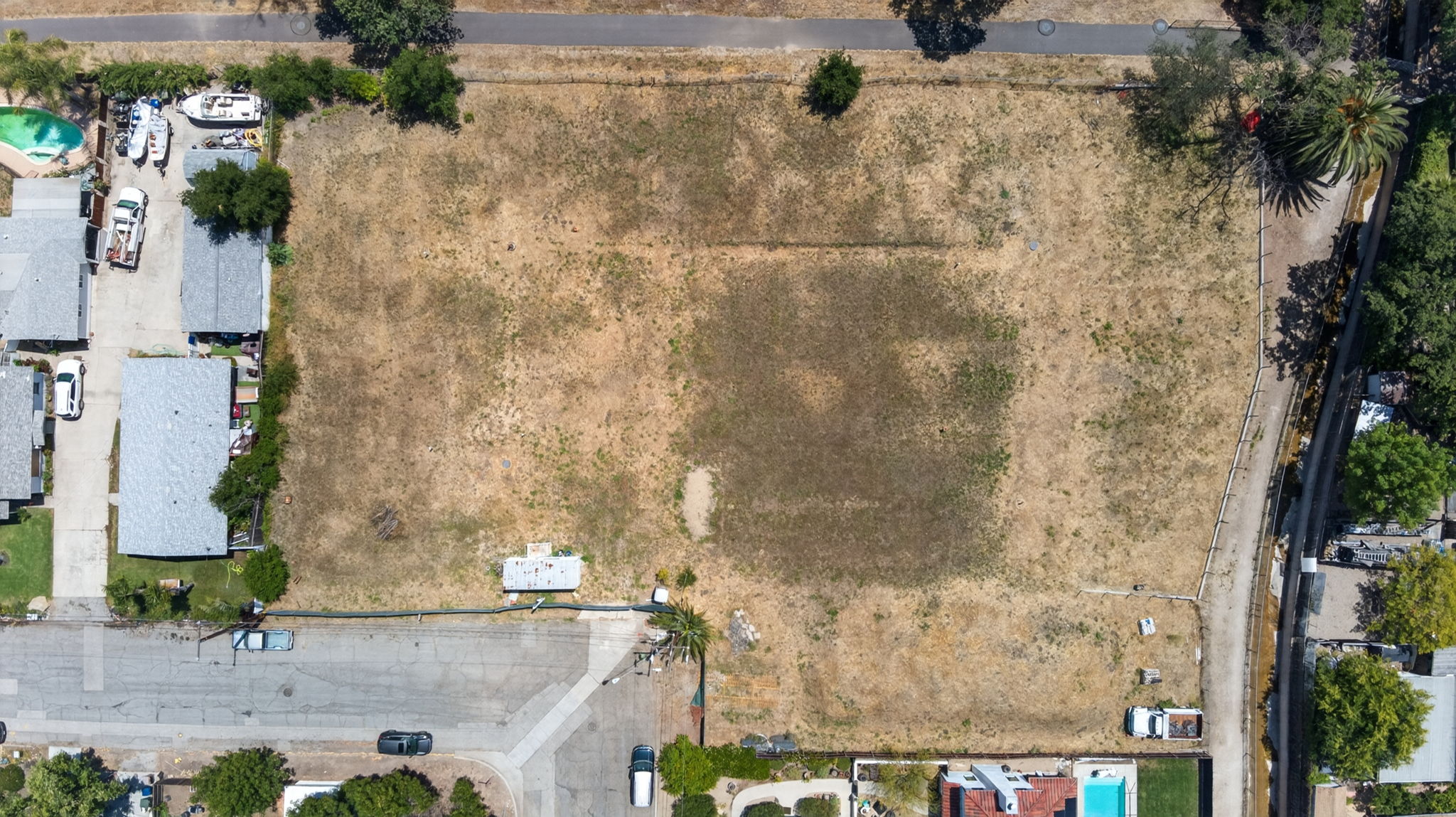
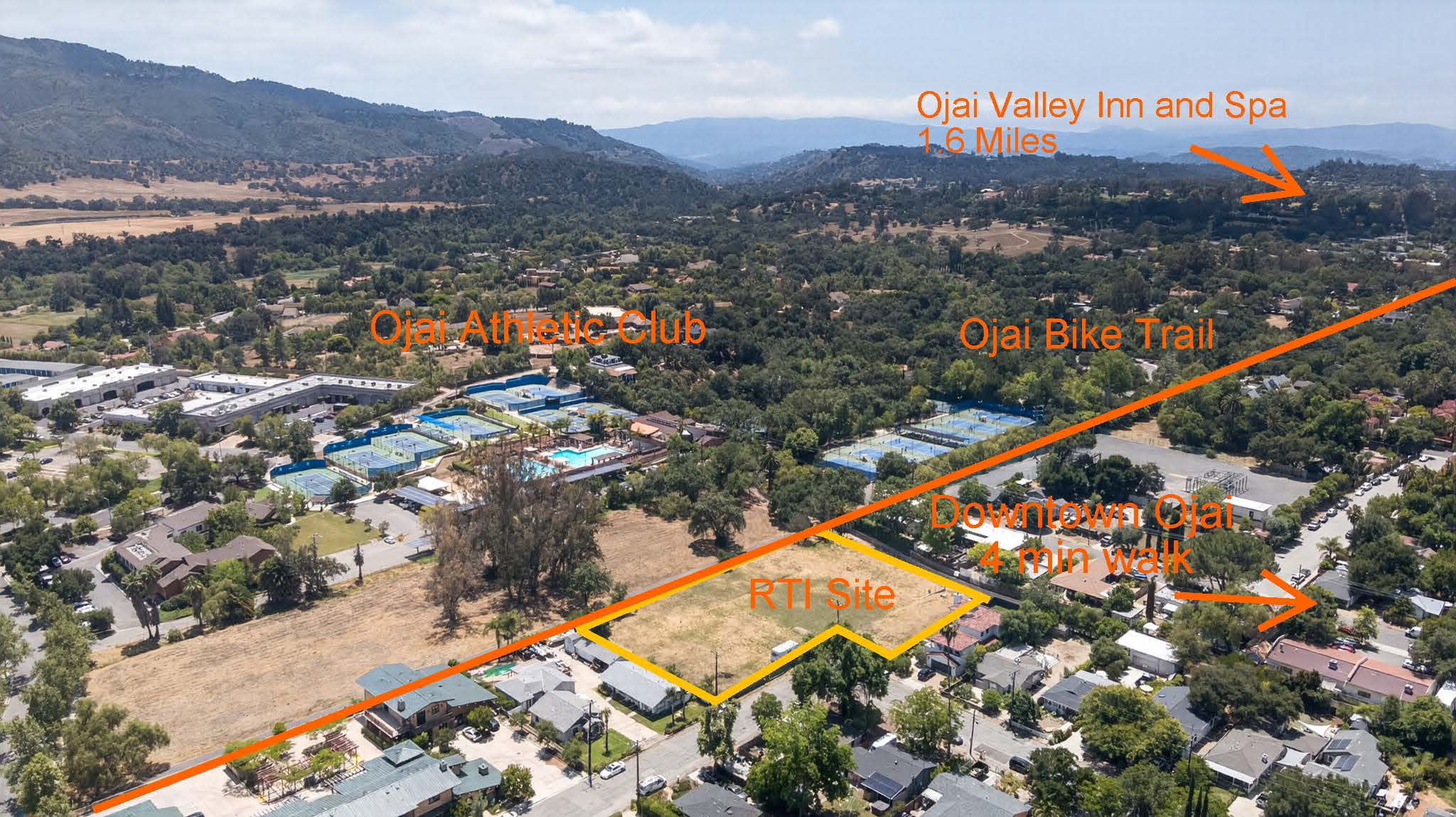
Nine detached single-family homes on ten platted lots in the heart of Ojai. Approved Architectural, Civil, Landscape, and Structural sets in hand. Shovel-ready.
The LAAA Team is proud to present 601 Pearl Street, a rare opportunity to acquire a fully entitled, fully platted small-lot subdivision steps from downtown Ojai. The seller has completed the heavy lifting: ten lots recorded under Tract No. 5964, full approved plan sets across Architectural, Civil, Landscape, and Structural disciplines, and a development program for nine detached homes averaging 1,835 SF each. A buyer steps into a project ready to permit and pour foundations, in a market where new construction is exceptionally scarce.
Ojai’s housing market is supply-constrained by design. The city’s strict growth controls and small-town zoning have protected its character for generations, and the result is one of the most consistently priced lifestyle markets in coastal Southern California. Recent single-family sales near downtown have traded at a median of $1.25M with a $/SF distribution that runs from the $600s for older product to north of $1,200/SF for premium and renovated homes. New construction trades at the top of that range and is the rarest product in the submarket.
At an asking price of $3,700,000, the offering represents $411,111 per buildable home and $73 per land square foot. Against a development program with a $1,835,000 per-home exit at $1,000/SF on 1,835 SF of brand-new product and a total all-in build cost of approximately $6.4M, the residual model leaves a developer with roughly $5.0M of profit at a 32% margin on net revenue. The price already reflects movement from the seller’s original $4.5M ask.
Ten individually recorded lots under Tract No. 5964, with approved Architectural, Civil, Landscape, and Structural sets. No further mapping required. A buyer can pull permits and begin construction without entitlement risk.
Ojai’s growth controls suppress new supply by design. Across a 36-comp set of recent sales near downtown, virtually none are new construction. Subject is the only entitled small-lot project of meaningful scale in the immediate downtown corridor.
At $3.7M land, $380/SF hard cost, $1,000/SF brand-new exit and 18-month carry, the residual leaves $5.04M in developer profit (32.15% on net revenue). Independent residual run by the LAAA Team produces similar results across multiple cost scenarios.
The same nine-home program supports a build-to-sell exit at $16.5M gross sellout or a build-to-rent hold at $5.5M–$6.2M in stabilized value (NOI of $605K–$632K at $6,000–$6,250 monthly rents). Optionality reduces market-cycle risk.
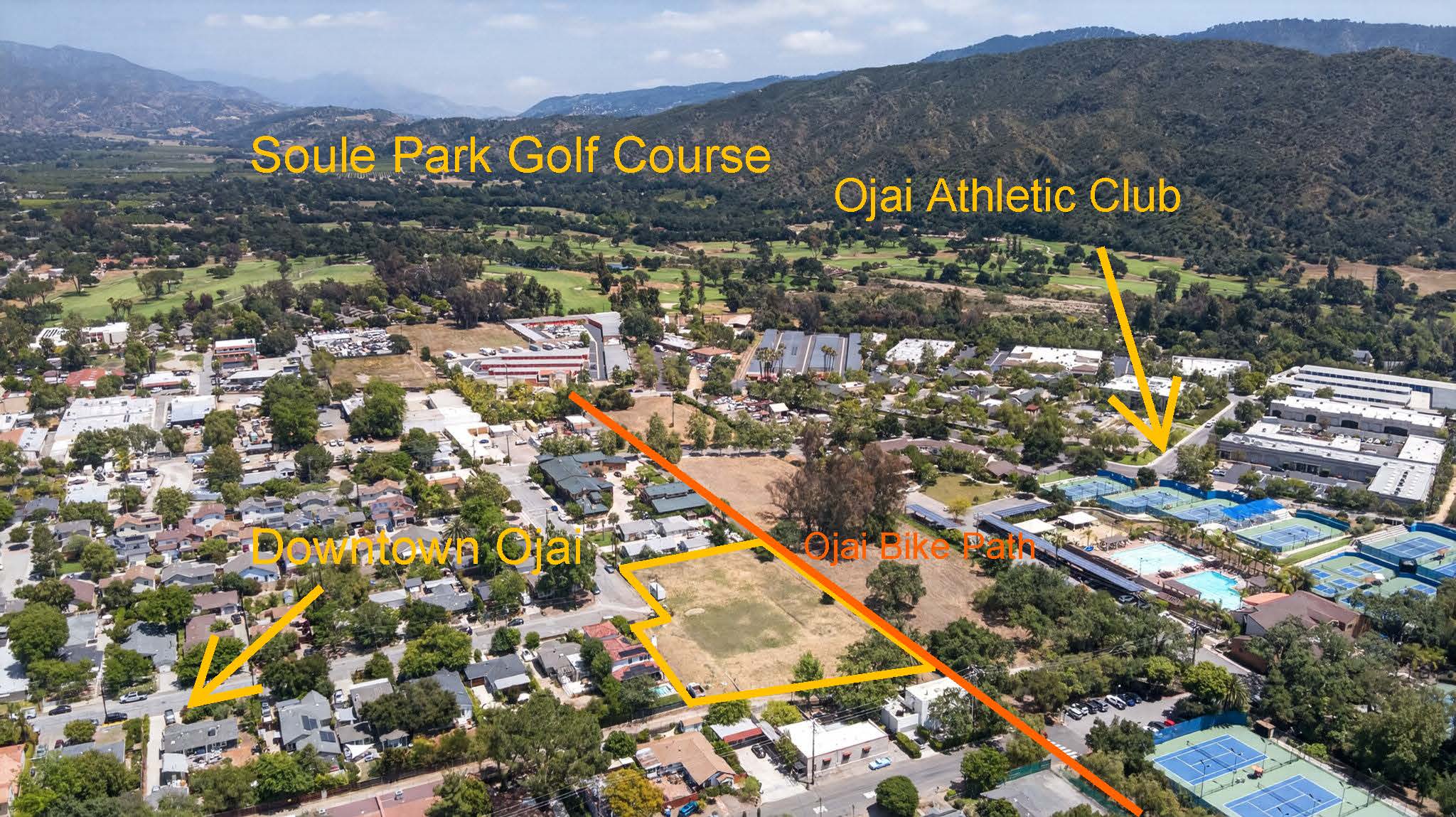
Steps from the Ojai Avenue Arcade, downtown shops, restaurants, and the Saturday farmers’ market. Buyers in this corridor pay premiums for walkability. Pearl Street is one of the few residential blocks where buyers can have both town life and lot privacy.
Property tax has been delinquent on all ten parcels since 2023-2024, signaling a capital-constrained seller. Total redemption is approximately $22,000 across all lots, easily cured at closing from seller proceeds. Title is held in a single California LLC vesting; no partition or partnership cleanup required.
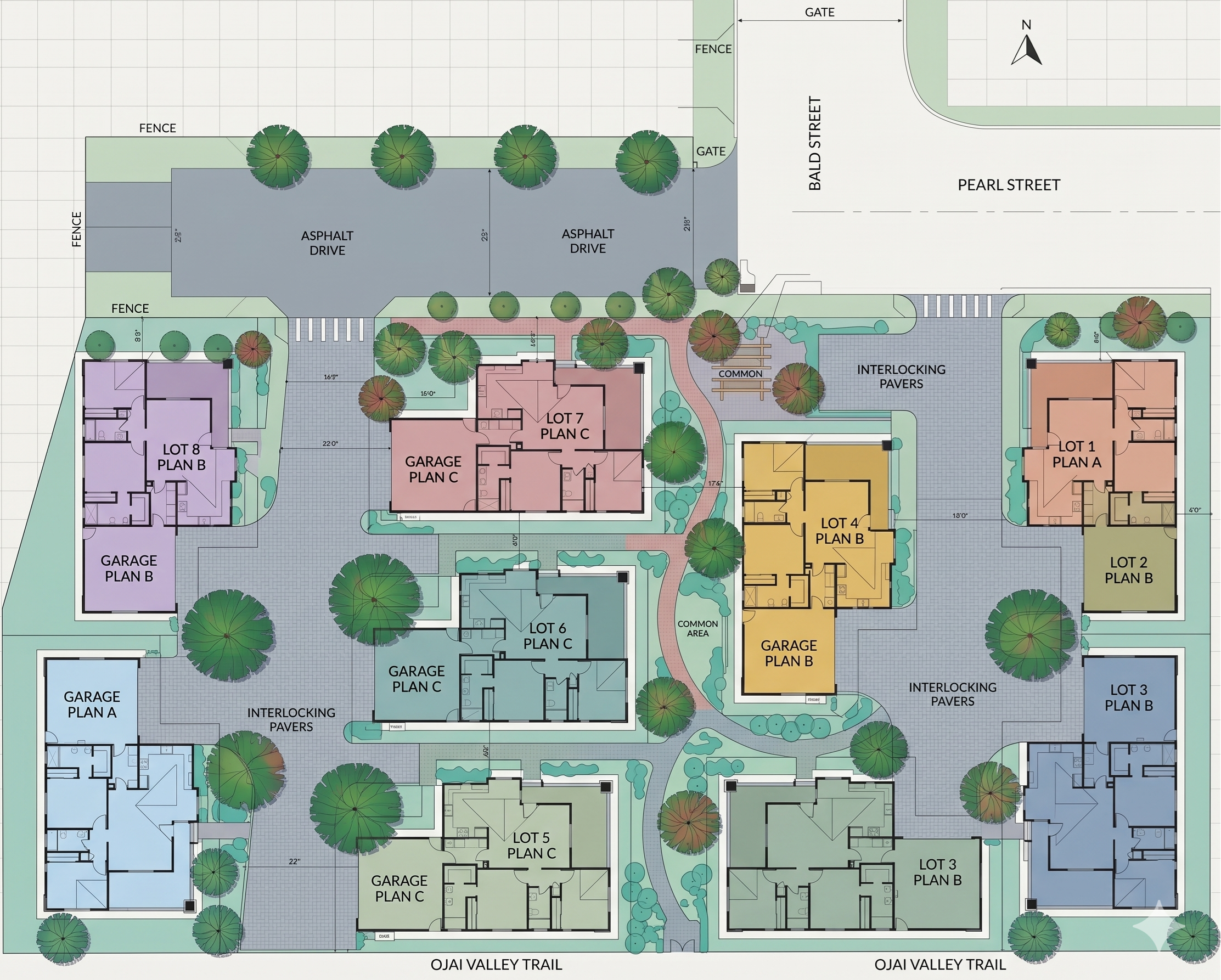
A buyer is not acquiring raw entitlement. The project has been designed, engineered, and approved across all four disciplines. Below is what the approved plan set actually delivers: a nine-home Craftsman cottage community, single-story, oriented around a private drive, with full civil and landscape engineering ready to permit.
Nine detached homes arranged around a private east-west drive, with frontage on Pearl Street to the north and Ojai Valley Trail to the south. Existing mature trees are preserved along the drive. Each home sits on its own deeded lot with an individual driveway off the common drive. Two fire-department turnarounds are built into the plan.
The architectural language is on-brand for Ojai: gabled rooflines with deep overhanging eaves, stone wainscot at the base, horizontal lap siding above, multi-pane wood-trim windows, and cedar-shake roof texture. The homes read as cottages rather than tract product — a deliberate choice that supports the per-home premium the residual model assumes.
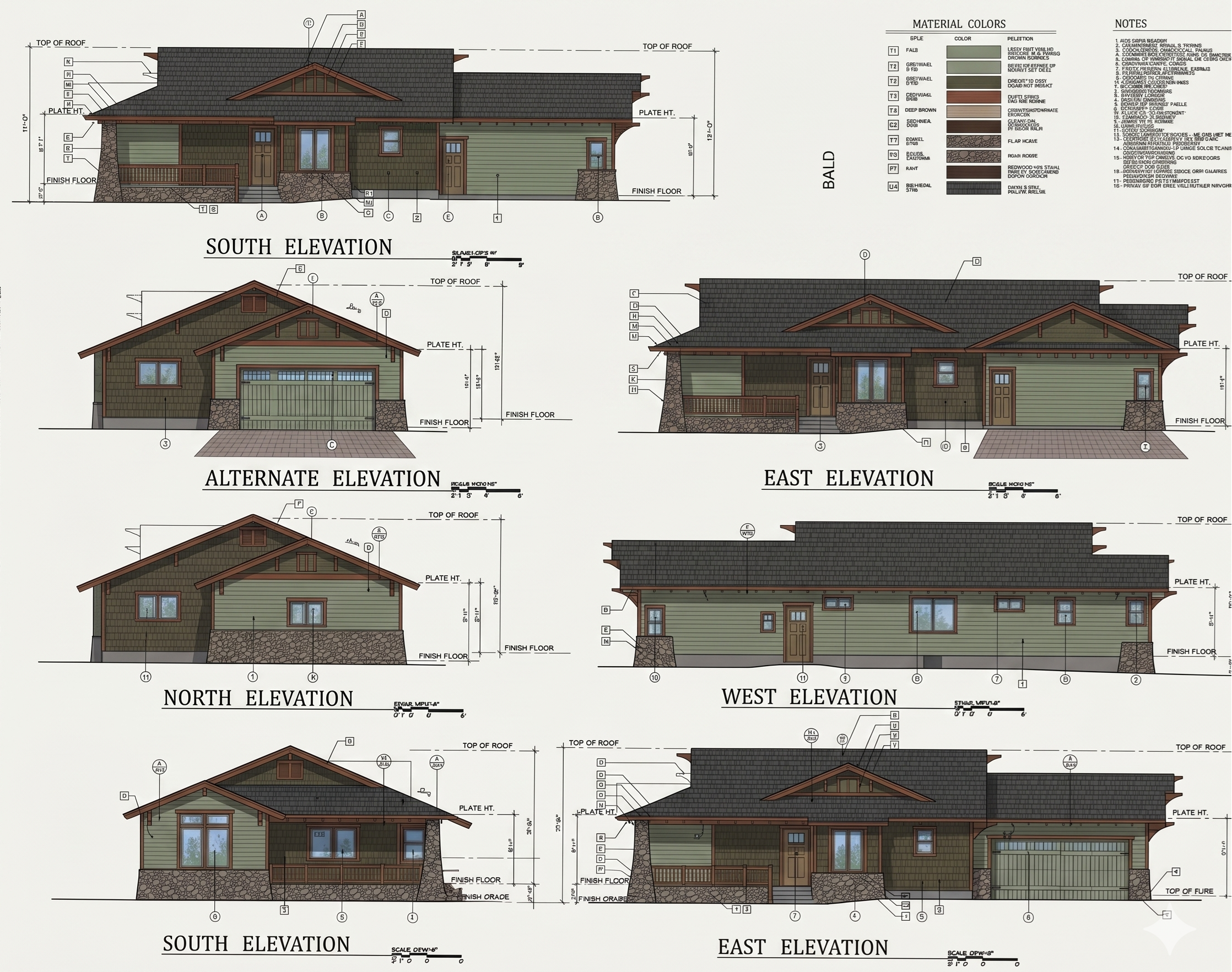
The approved set delivers four floor plan variants — Plan A (base), Plan B (Plan A mirrored), Plan C (Plan A with end garage), and Plan D — distributed across the nine lots to create visual variety along the drive. Each plan keeps the same 1,146 SF interior program with a primary suite, secondary bedrooms, two bathrooms, and an open kitchen-living layout opening to the covered porch.
Designed by Gregg Toland Landscape Architect (LARC #2243). The landscape package includes the planting plan, irrigation system design, site-lighting plan, and a soils management program tied to grading. Thirty-eight percent of the site is dedicated landscape — well above what typical small-lot product delivers — producing a real-yard feel for each home.
Six-sheet civil set covering existing topography, street improvements (Pearl Street curb cut, Bald Street frontage), precise grading, water line improvements to serve all nine lots, erosion control, and sections/details. All off-site infrastructure has been engineered — a buyer is not exposed to design risk on utilities or street work.
| Discipline | Firm / Lead | Set |
|---|---|---|
| Architecture | Mark Shelnutt, Architect, Inc. (Oak View, CA) | 18-sheet set, A1–A8+ |
| Civil Engineering | (named on architectural cover) | 6 sheets including Water Line, Grading, Erosion Control |
| Structural Engineering | Laima B. Reeder, P.E. | 7-sheet set, foundation through lateral |
| Landscape Architecture | Gregg Toland, LARC #2243 (Sherman Oaks) | 9 sheets including irrigation, lighting, planting |
| Applicant / Owner | Pearl Street Associates, LLC | — |
The approved plans show 1,146 SF interior conditioned area per home plus 451 SF attached garage and 238 SF covered porch, totaling 1,835 SF under roof. The development pro forma uses the 1,835 SF figure for cost-per-SF construction analysis (the standard convention for builder economics) and prices the brand-new exit on the same under-roof basis at $1,000/SF, producing $1,835,000 per home. New construction is essentially absent from the recent comp set, and brand-new product in this corridor commands a structural premium over re-sale stock — a premium the model captures.
The pro forma below is built at $380 per SF hard cost, an 18-month build, and a $1,000/SF brand-new exit. At the $3.7M asking price, a developer earns approximately $5.04M of profit on $15.69M of net sale proceeds, equating to a 32.15% margin on net revenue.
| Line Item | Calculation | Amount |
|---|---|---|
| Hard Construction Cost | 16,515 SF × $380/SF | $6,275,700 |
| Soft Costs | Engineering, permits, legal | $90,000 |
| Total Development Cost | $6,365,700 | |
| Construction Loan Interest | 7.5% × 18 months | $475,623 |
| Property Tax + Insurance (during build) | 18 months | $104,063 |
| Total Carry & Financing | $579,686 | |
| Land Cost (Asking) | $3.7M ÷ 9 units | $3,700,000 |
| Total Project Cost | $10,645,386 |
| Line Item | Calculation | Amount |
|---|---|---|
| Gross Sales Proceeds | 9 × $1,835,000 | $16,515,000 |
| Closing Costs of Sale | 5.00% | ($825,750) |
| Net Sale Proceeds | $15,689,250 | |
| Less: Total Project Cost | ($10,645,386) | |
| Developer’s Profit | 32.15% on Net Revenue | $5,043,864 |
The same nine-home program supports a build-to-rent hold. At $6,000 to $6,250 in monthly rent per home, the program generates $605,000 to $632,000 of NOI. On an all-in basis of approximately $7.0M (land plus development), this implies a stabilized yield in the 9 to 10 percent range — a credible Plan B for a buyer who wants to retain the asset through a softer for-sale cycle.
The comp set below pulls every recorded single-family sale within a one-mile radius of downtown Ojai over the trailing 24 months, then filters to the 17 transactions most directly comparable to the subject’s 1,835 SF target product. Median sale price across the subset is approximately $1.23M; $/SF runs from the high-$500s on tired vintage product up past $1,300/SF on renovated downtown homes. Critically, virtually none of these comps are new construction — brand-new product is essentially absent from the market and commands a structural premium when delivered.
| Address | Bd/Br | SF | Lot SF | Year | Sale Date | Sale Price | $/SF |
|---|---|---|---|---|---|---|---|
| 202 N. Fulton St | 3/2 | 1,196 | 7,405 | 1977 | Jul 2025 | $1,293,500 | $1,082 |
| 309 N. Fulton St | 3/2 | 1,430 | 7,500 | 1928 | May 2024 | $1,205,000 | $843 |
| 309 Topa Topa Dr | 2/2 | 1,384 | 7,504 | 1946 | May 2025 | $1,230,000 | $889 |
| 314 W. Aliso St #A | 3/1 | 914 | 6,969 | 1929 | Jun 2025 | $1,200,000 | $1,313 |
| 312 E. Matilija St | 3/2 | 1,325 | 8,727 | 1957 | Sep 2024 | $1,000,000 | $755 |
| 413 Crestview Dr | 3/2 | 1,260 | 5,850 | 1957 | Jun 2024 | $1,200,000 | $952 |
| 301 Park Rd | 2/2 | 1,659 | 8,957 | 1947 | Sep 2025 | $1,300,000 | $784 |
| 405 Oriole St | 3/2 | 1,531 | 9,853 | 1977 | Jul 2024 | $1,330,000 | $869 |
| 1117 Golden West Ave | 3/2 | 1,531 | 10,018 | 1977 | Jul 2023 | $1,275,000 | $833 |
| 1207 San Ramon Way | 3/2 | 2,312 | 12,493 | 1985 | May 2023 | $1,579,000 | $683 |
| 1209 San Ramon Way | 3/2 | 1,987 | 12,196 | 1985 | Oct 2025 | $1,395,000 | $702 |
| 503 Drown Ave | 2/2 | 1,188 | 7,100 | 1927 | Oct 2023 | $1,330,000 | $1,120 |
| 209 Bald St | 4/2 | 2,179 | 8,131 | 1951 | Nov 2024 | $1,275,000 | $585 |
| 412 N. Signal St | 3/1 | 1,100 | 7,500 | 1951 | Jul 2024 | $1,035,000 | $941 |
| 201 Fox St | 3/2 | 1,135 | 4,791 | 1948 | Feb 2026 | $1,029,500 | $907 |
| 216 E. Matilija St (Premium tier) | 2/3 | 1,955 | 8,000 | 1957 | Feb 2024 | $2,400,000 | $1,228 |
| 216 E. Matilija St (Re-sale at premium) | 2/3 | 1,955 | 7,840 | 1957 | Dec 2025 | $2,475,000 | $1,266 |
Source: MLS-tracked closed sales near downtown Ojai over the trailing 24 months, filtered to 1,200–2,000 SF range (with two premium-tier reference points). Full 36-sale comp set on file with the LAAA Team. The two 216 E. Matilija sales are the same property selling twice in 22 months at premium pricing — a direct demonstration of buyer willingness to pay above $1,200/SF for premium downtown product.
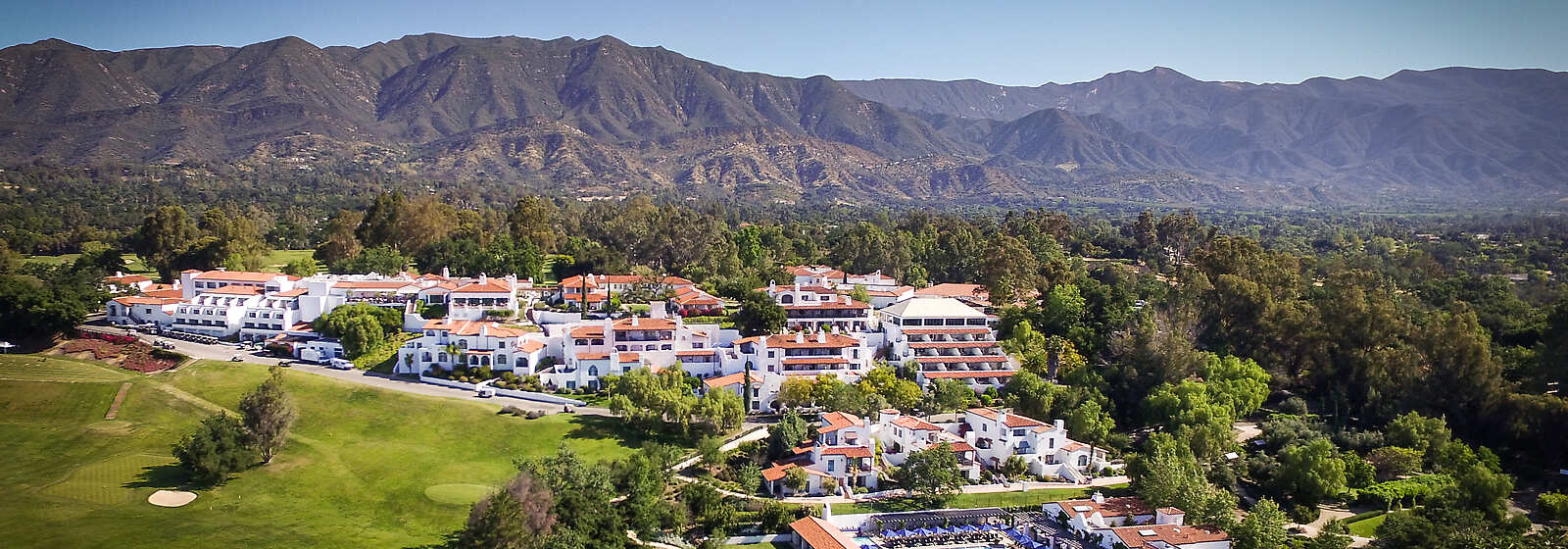
Ojai sits 14 miles inland from Ventura and roughly 80 miles northwest of Los Angeles, in a long east-west valley sheltered by the Topa Topa Mountains. The city’s population is roughly 7,500, and growth controls keep it that way. Strict zoning, a town-wide architectural overlay, height restrictions, and a tightly capped subdivision pipeline make new for-sale product genuinely rare. The result is one of the most supply-constrained lifestyle markets on the Southern California coast.
Ventura County deals are led by Logan Ward, the LAAA Team’s specialist for the Ventura and Santa Barbara County corridor. Logan partners with co-founders Glen Scher and Filip Niculete — senior managing directors who together have closed more than $1.4 billion in transactions across Los Angeles, Ventura, and Santa Barbara counties.
Ready to tour the site, walk the plans, or discuss the underwriting? Reach out to any member of the team above. We’ll coordinate site access, deliver the full due diligence package, and walk you through the model line by line.